
The Best Time to Book Flights to Harare (And Save Hundreds)
Flights from London to Harare vary by up to £450 depending solely on when you book and travel same airline, same seat, wildly different prices. The difference between paying £580 and £950 for economy isn’t luck; it’s timing. Most travelers either book impulsively (6+ months early, paying premium prices) or procrastinate (waiting until last minute when scarcity pricing kicks in). Both approaches cost you hundreds of pounds unnecessarily. This guide reveals the exact booking windows, travel months, and even specific days of the week that consistently deliver the lowest fares on UK to Harare routes. We’ve analyzed thousands of flight bookings and airline pricing patterns to identify when you should actually click “purchase.” Whether you’re visiting family in Zimbabwe, planning a Victoria Falls adventure, or traveling for business, these timing strategies apply across all cabin classes economy, premium economy, and business class. By the end, you’ll know precisely when to start monitoring prices, when to pull the trigger on booking, and which months to avoid if flexibility allows. The Optimal Booking Window: 8-16 Weeks Before Departure Book your Harare flight 8-16 weeks out for optimal pricing this timing saves £200-350 on average compared to booking outside this window. Why this window works: Airlines use sophisticated revenue management systems that adjust prices in waves. The 8-16 week window (roughly 2-4 months before departure) represents the “Goldilocks zone” where airlines: Have clear visibility into actual demand patterns Still need to fill remaining seats before entering panic pricing Offer promotional inventory to stimulate bookings According to Skyscanner’s 2024 flight data analysis, UK to African destination tickets booked 10-14 weeks out average £243 cheaper than those booked within 3 weeks of travel. Real pricing comparison – London to Harare economy: Booking Timeline Average Price Variance 6+ months early £720 +24% 12 weeks early £580 OPTIMAL 4 weeks early £780 +34% 1 week early £930 +60% The booking pattern breakdown: Too early (5-6+ months): Airlines haven’t adjusted prices based on demand. You’re paying a “planning premium” for early certainty. Sweet spot (8-16 weeks): Promotional fares released, competitor price-matching active, best availability still exists. Too late (under 6 weeks): Scarcity pricing dominates, budget seats sold out, only expensive inventory remains. Action plan: Set a calendar reminder for exactly 14 weeks before your target travel date. Start monitoring prices then, and book within 2 weeks of that date when you find a fare under £650 for economy or £1,700 for business class. Cheapest Months to Fly to Harare Travel timing impacts prices even more dramatically than booking timing. February through March and October through November consistently deliver the lowest fares often £150-200 cheaper than peak season. Month-by-month pricing breakdown (London to Harare economy): Months Typical Price Range Notes February – March £580–650 Post-Christmas lull, very low demand. Late summer/early autumn with occasional rain. Best for budget travelers and avoiding crowds. October – November £600–680 Between major holidays. Spring weather with pleasant temperatures. Great time for Victoria Falls as water levels rise. April – May £650–720 Shoulder season with stable demand. Cooler, dry autumn weather. Excellent safari conditions and comfortable temperatures. June – August £680–750 European summer holidays increase demand slightly. Cool, dry winter weather (12–20°C). Ideal for travelers who prefer cooler temperatures. September £720–780 Demand builds ahead of peak season. Spring warming begins. Best time to see Victoria Falls at its lowest (Devil’s Pool). Months Typical Price Range Notes December £850–1,050 Peak pricing due to Christmas, school holidays, and diaspora travel. Hot early-summer weather. Best only if dates are fixed. January £780–880 Continued holiday travel after New Year. Mid-summer with increasing rainfall. Prices remain elevated. Easter Period (varies) £800–920 UK school holidays and religious travel drive prices up. Weather depends on Easter timing (March–April). Money-saving insight: If your travel dates are flexible within a 4-6 week range, shifting to February, March, or October can save you more than any booking tactic or fare alert system. For weather considerations and what to expect each month in Harare, check our month-by-month weather guide. Best Days of the Week to Book Tuesday and Wednesday bookings average 12-15% cheaper than weekend searches for the same flights. The airline pricing cycle: Airlines don’t randomly adjust prices they follow a predictable weekly pattern: Monday evening: Airlines upload fare changes and new promotions to booking systems (typically 7-9 PM GMT) Tuesday morning: Changes go live, competitor airlines react with price-matching Tuesday-Wednesday: Peak price-matching activity creates lowest fares as airlines compete Thursday-Friday: Prices stabilize, business travelers book regardless of price Weekend: Highest prices due to leisure traveler surge and reduced airline staff for pricing adjustments Real example tracked over 4 weeks (London to Harare, same flight, same date): Monday search: £695 Tuesday search: £615 (£80 cheaper) Wednesday search: £610 (£85 cheaper) Friday search: £720 Sunday search: £745 (£135 more expensive than Wednesday) Pro tip: Set price alerts on Monday evening, review them Tuesday morning, and book Tuesday afternoon or Wednesday if you see your target price. This maximizes your chance of catching new promotions before they sell out. Important clarification: This refers to the day you book/search, not the day you travel. Travel day pricing patterns are different (covered in next section). Cheapest Days of the Week to Fly Flying Tuesday through Thursday saves £60-120 compared to weekend departures on the same route. Why travel day matters: Business travelers cluster around Monday morning departures (to arrive for week start) and Friday afternoon returns (to get home for weekend). Families prefer Friday/Saturday departures and Sunday returns to maximize weekend time. This demand concentration creates pricing disparities. Departure day pricing (London to Harare, same month): Day Average Price (£) Price Difference Tuesday £600 Baseline Wednesday £605 +£5 Thursday £620 +£20 Monday £680 +£80 Saturday £695 +£95 Friday £730 +£130 Sunday £750 +£150 This pattern typically saves £120-200 on round-trip bookings compared to Friday departure/Sunday return. Trade-offs to consider: Midweek departures mean: Taking extra vacation days if you work weekends Potentially cheaper accommodation at destination (avoiding weekend rates) Quieter airports and less stressful check-in For
Harare Travel Guide for UK Visitors
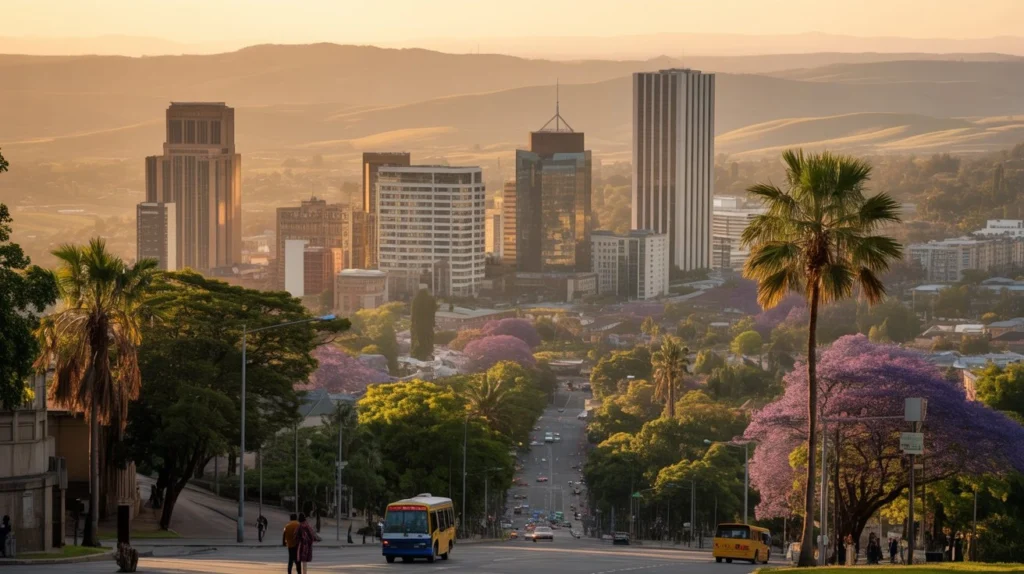
Harare welcomes over 15,000 UK visitors annually, yet most travelers know surprisingly little about Zimbabwe’s capital before they arrive. This creates unnecessary stress navigating airports, finding accommodation, and understanding local customs. Whether you’re visiting family, conducting business, or using Harare as your gateway to Victoria Falls, knowing what to expect makes your trip smoother and more enjoyable. This guide covers the essentials UK travelers actually need: getting from the airport to your hotel, understanding visa requirements, knowing which areas are safe, finding quality accommodation, and discovering what makes Harare worth exploring beyond just a stopover city. The city offers a fascinating blend of colonial architecture, vibrant markets, contemporary art scenes, and proximity to natural attractions but you need to know where to look. Visa Requirements for UK Passport Holders UK citizens receive visa on arrival at Robert Gabriel Mugabe International Airport (HRE). The process is straightforward but requires preparation. What you need: Passport valid for minimum 6 months beyond your departure date Return or onward ticket (immigration will ask to see confirmation) Accommodation details (hotel name and address) $30-55 USD in cash for visa fee (exact amount depends on stay duration) Important: The visa fee must be paid in US dollars cash. They don’t accept pounds sterling, cards, or other currencies. Have clean, newer bills tattered or very old notes are sometimes rejected. Visa fee structure: Single entry (up to 90 days): $30 USD Double entry: $45 USD Multiple entry: $55 USD Processing time: Typically 15-20 minutes during normal hours. Can extend to 45 minutes if multiple flights arrive simultaneously. E-visa option: You can apply online at evisa.gov.zw before traveling, but most UK visitors find arrival processing faster and simpler. E-visas cost the same and sometimes take 3-5 business days to process. Special consideration: If you’re combining Zimbabwe with visits to Zambia (Victoria Falls), consider the KAZA UniVisa ($50 USD) which covers both countries for 30 days. Available at Harare airport. For detailed visa processes including document checklists and common mistakes to avoid, see our complete Zimbabwe visa guide for UK travelers. Getting from the Airport to Harare City Center Robert Gabriel Mugabe International Airport (HRE) sits 15km southeast of central Harare. Here are your transport options: Pre-arranged hotel transfers (Recommended): Most quality hotels offer airport pickup for $25-40 USD. Book this when you reserve your room it’s the safest and most convenient option, especially for first-time visitors arriving at night. Transport Option Details & Cost Important Notes Pre-booked Airport Transfer Driver meets you at arrivals with a name sign. Secure, reliable vehicle with a fixed price. No negotiation needed. Best option for first-time visitors. Official Airport Taxi Available outside arrivals. Cost to city center hotels is $25–35 USD. Only use registered airport taxis from the official rank. Avoid unmarked vehicles or drivers approaching you inside the terminal. Uber / Bolt Operates in Harare. Typical cost is $15–20 USD equivalent (paid in ZWL via the app). Works reliably if you have international data or a local SIM card. Car Rental Available at the airport from Avis, Europcar, and local agencies. £35–60 per day depending on vehicle size. Not recommended for first-time visitors. Local traffic patterns and road conditions take adjustment. Journey Time 25–35 minutes during off-peak hours. Up to 60 minutes during rush hours. Rush hours are 7–9 AM and 5–7 PM. Where to Stay in Harare Best neighborhoods for UK visitors: The Avenues (City Center): Convenient location near restaurants, businesses, and museums. Hotels range from budget ($40/night) to mid-range ($80-120/night). Recommended: Meikles Hotel (historic, colonial-era property, £90-130/night), Rainbow Towers (modern, business hotel, £70-100/night). Best for: Business travelers, short stays, accessing city attractions easily. Borrowdale: Upscale northern suburb, 12km from city center. Safer, quieter, with shopping centers and restaurants nearby. Recommended: Meikles Borrowdale (£100-140/night), Borrowdale Brooke (boutique hotel, £85-115/night). Best for: Leisure travelers, families, longer stays. Mount Pleasant: Residential area with guesthouses and B&Bs. More affordable (£40-70/night) with local neighborhood feel. Best for: Budget-conscious travelers, those wanting authentic local experience. Safety consideration: Stick to established hotels in these neighborhoods. Avoid booking unknown guesthouses without recent reviews from international travelers. Check TripAdvisor and Booking.com reviews specifically from UK/US/EU guests for accurate assessments. Booking tip: Hotels in Harare often quote prices in USD. Confirm whether breakfast is included most mid-range and upscale properties include buffet breakfast. What to See and Do in Harare Harare deserves 2-3 days minimum to experience properly, not just a quick stopover. Place Details National Gallery of Zimbabwe Home to Zimbabwe’s finest collection of contemporary African art, Shona stone sculptures, and rotating exhibitions. Entry Fee £3–5 Time Needed 2–3 hours Why Visit One of Africa’s best contemporary art museums. Combines traditional Shona sculpture with modern works and offers an air-conditioned break from Harare heat. Location Julius Nyerere Way, city center. Walkable from most central hotels. Mbare Musika Market Harare’s largest and most vibrant market. Sells vegetables, crafts, secondhand clothes, street food, and more. Best Time to Visit Morning 7–10 AM when the market is most active. Safety Note Visit with a local guide or group. Avoid expensive jewelry, cameras, and carrying large amounts of cash. Petty theft can occur. Why Visit The most authentic Harare experience. Excellent for street photography (ask permission), local food, and observing daily life. Chapungu Sculpture Park Open-air gallery showcasing Shona stone sculptures in a landscaped garden setting. Entry Fee £5–8 Why Visit Buy directly from artists at better prices than hotel shops. Peaceful atmosphere and opportunity to meet sculptors. Location Borrowdale. Easy to combine with lunch at nearby restaurants. Mukuvisi Woodlands Urban nature reserve with walking trails, picnic areas, and small wildlife including impala, zebra, and giraffe. Entry Fee £6–10 Why Visit Easy half-day nature escape without leaving the city. Very family-friendly. Horseback riding available. Domboshava Rocks Ancient granite formations with rock paintings, plus a nearby local pottery village. Distance from Harare Approximately 30 km northeast Travel Time 45–60 minutes by car Getting There Hire a driver for the day (£40–60) or join an organized tour (£50–80, often includes lunch). Why Visit
Do You Need a Visa for Zimbabwe? UK Traveller’s Guide
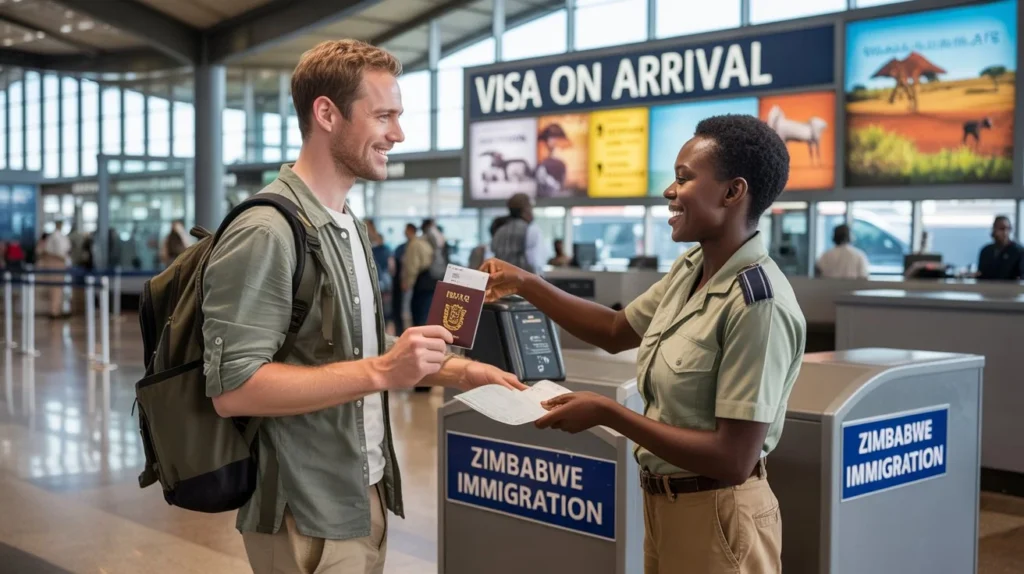
Yes, UK passport holders need a visa to enter Zimbabwe but the good news is you can get it on arrival at Harare or Victoria Falls airports in under 20 minutes. Unlike countries requiring advance applications, lengthy processing times, and embassy visits, Zimbabwe makes it remarkably straightforward for British travelers. You land, pay the fee, get your stamp, and proceed to baggage claim. However, there are specific requirements, costs, and document preparations you need to know before boarding your flight. Arriving unprepared can cause delays, rejections, or unnecessary stress at immigration. This guide covers everything UK travelers need: visa types, exact costs, required documents, e-visa vs arrival options, and the KAZA UniVisa for combined Zimbabwe-Zambia trips. Visa Requirements for UK Passport Holders UK citizens receive visa on arrival at all Zimbabwean ports of entry, including: Robert Gabriel Mugabe International Airport (Harare) Victoria Falls International Airport Land borders (Beitbridge, Chirundu, Kariba, Victoria Falls) You cannot enter Zimbabwe without a visa, even for short visits or airport transits exceeding 24 hours. Visa eligibility: British passport holders qualify for tourist visas automatically. You don’t need pre-approval or sponsorship letters for standard tourism or business visits under 90 days. Processing time at airport: Typically 15-20 minutes during normal hours. Can extend to 30-45 minutes if: Multiple international flights arrive simultaneously You’re traveling during peak season (December, Easter) Immigration is short-staffed (occasional at smaller entry points) Important: The visa counter operates 24/7 at major airports, but processing may be slower during overnight hours (midnight-6 AM) with reduced staff. What Documents You Need Have these ready before joining the immigration queue: Valid passport: Must be valid for minimum 6 months beyond your intended departure date from Zimbabwe Must have at least 2 blank pages for entry/exit stamps Damaged passports may be rejected ensure yours is in good condition Return or onward ticket: Immigration officers will ask to see proof you’re leaving Zimbabwe. Accepted formats: Printed flight confirmation Email confirmation on your phone (ensure battery charged) Onward travel booking if continuing to other countries Accommodation details: Have ready: Hotel name and address Booking confirmation (printed or on phone) If staying with family/friends: their full name, address, and phone number Visa fee in US dollars cash: $30 USD for single-entry visa (up to 90 days) $45 USD for double-entry visa $55 USD for multiple-entry visa Critical: Must be paid in US dollar cash only. They do not accept: British pounds Credit/debit cards South African Rand Other currencies Bank transfers Cash quality matters: Bring clean, newer bills. Very old, torn, or heavily worn notes are sometimes rejected. $20 bills or smaller denominations work best. Yellow fever certificate (if applicable): Required only if you’re arriving from a yellow fever endemic country. Direct from UK? Not required. Connecting through Kenya, Uganda, or other endemic countries? Bring your vaccination certificate. Visa Costs and Types Single-entry visa: $30 USD Valid for up to 90 days One entry only If you leave Zimbabwe (even to Zambia for Victoria Falls day trip), you need a new visa to return Best for: UK travelers visiting only Zimbabwe with no cross-border trips Double-entry visa: $45 USD Valid for up to 90 days Two entries allowed Best for: Travelers doing day trips from Victoria Falls to Zambian side, then returning to Zimbabwe Multiple-entry visa: $55 USD Valid for up to 90 days Unlimited entries during validity period Best for: Business travelers, those visiting multiple Southern African countries with Zimbabwe as base Which visa type should you buy? Choose single-entry if: You’re only visiting Zimbabwe You’re flying in and out without crossing land borders You’re not visiting Victoria Falls (which straddles Zimbabwe-Zambia border) Choose double-entry if: You’re visiting Victoria Falls and want to see the Zambian side (natural infinity pool at the edge of the falls, lunar rainbow) You’re making one cross-border excursion but returning to Zimbabwe Choose multiple-entry if: You’re combining Zimbabwe with multiple regional countries You’re on business requiring cross-border movement You’re uncertain about your itinerary and want flexibility Consider KAZA UniVisa instead (see below) if visiting both Zimbabwe and Zambia. KAZA UniVisa: Zimbabwe and Zambia Combined If you’re visiting Victoria Falls and crossing between Zimbabwe and Zambia, the KAZA UniVisa offers better value than separate visas. What is KAZA UniVisa? A special visa allowing unlimited movement between Zimbabwe and Zambia for 30 days. Issued jointly by both countries. Cost: $50 USD Where to get it: Victoria Falls Airport (Zimbabwe side) Livingstone Airport (Zambia side) Victoria Falls border crossing Not available at Harare Airport Who should get KAZA UniVisa: Travelers basing themselves at Victoria Falls Those wanting to experience both Zimbabwean and Zambian sides of the falls Visitors doing activities split between countries (e.g., natural infinity pool in Zambia, sunset cruise in Zimbabwe) Those visiting Chobe National Park (Botswana) on day trips Important limitations: KAZA only covers Zimbabwe and Zambia. If you travel to other countries (Botswana, South Africa, Namibia), you exit the KAZA zone and need new visas to return. Cost comparison: Option 1 – Separate visas: Zimbabwe double-entry: $45 Zambia tourist visa: $50 Total: $95 Option 2 – KAZA UniVisa: Combined unlimited movement: $50 Savings: $45 The KAZA makes financial sense for anyone spending time at Victoria Falls who wants to explore both sides. E-Visa vs Visa on Arrival Zimbabwe offers online e-visa applications, but most UK travelers find visa on arrival simpler and faster. E-visa process: Apply at evisa.gov.zw Upload passport scan, photo, travel documents Pay $30-55 USD online (credit card accepted) Wait 3-5 business days for approval Print approval letter Present at immigration on arrival E-visa advantages: Avoid cash requirement (pay by card online) Pre-approval confirmation before traveling Slightly faster airport processing (dedicated e-visa queue) E-visa disadvantages: 3-5 day processing time (sometimes longer) Technical website issues reported frequently Must print approval letter (extra step) Same cost as arrival visa Payment issues if using UK cards (international transaction failures) Visa on arrival advantages: No advance paperwork No waiting for approval Works even if you book flights last-minute Straightforward cash payment Visa on arrival
Best Time to Visit Harare: Month-by-Month Weather Guide

Harare sits at 1,490 meters (4,890 feet) elevation, giving it a surprisingly temperate climate compared to other African capitals. You won’t face the extreme heat of Nairobi or the humidity of Lagos but you will experience dramatic seasonal variations. Choosing the right month impacts everything: how much you’ll enjoy outdoor activities, what you should pack, whether you’ll encounter afternoon thunderstorms, and even flight prices. Most UK travelers visit Harare during winter/spring (May-September) for comfortable temperatures and dry conditions. But other months offer distinct advantages: fewer tourists, lower prices, and lush green landscapes. This guide breaks down Harare’s weather month-by-month so you can choose the perfect time based on your priorities whether that’s optimal weather, budget travel, or specific activities. Understanding Harare’s Climate Harare experiences subtropical highland climate with three distinct seasons: Dry/Cool Season (April-August): Clear skies, almost no rainfall Cool mornings and evenings (10-15°C) Warm afternoons (20-25°C) Low humidity, very comfortable Dry/Hot Season (September-November): Minimal rainfall Hot afternoons (27-32°C) Building heat and humidity before rains Vegetation dry and brown Wet/Warm Season (November-March): Regular afternoon thunderstorms Warm temperatures (22-28°C) High humidity (60-80%) Lush green landscapes What makes Harare different: The high elevation keeps temperatures moderate year-round. You won’t experience 40°C+ heat waves common in lower-altitude African cities. Even in summer (November-February), temperatures rarely exceed 30°C. Compared to UK weather: Harare’s winter (May-August) feels like a pleasant UK summer day sunny, 22-24°C, light jacket needed for mornings. Harare’s summer feels like a warm, humid UK summer with afternoon rain showers. Key advantage for UK travelers: No extreme temperature adaptation needed. You won’t suffer the shock of stepping into 38°C heat from London’s cool climate. Month-by-Month Weather Breakdown Month Temp (°C) Rainfall Weather Snapshot Best For Jan 19–26 180–200mm Peak rainy season, daily afternoon storms Budget travel, photography Feb 19–26 160–180mm Rain easing slightly, still humid Cheapest flights Mar 18–26 90–110mm Transition month, fewer storms Value travelers Apr 17–25 30–50mm Dry season begins, excellent weather First-time visitors May 14–23 10–15mm Dry, cool, peak season starts Perfect weather seekers Jun 12–21 5–10mm Cool mornings, zero rain Safaris, UK winter escape Month Temp (°C) Rainfall Weather Snapshot Best For Jul 12–21 0–5mm Driest month, clear skies Hiking, sightseeing Aug 14–24 5–10mm Dry, warming slightly Outdoor activities Sep 16–28 10–20mm Hottest month, very dry Victoria Falls activities Oct 19–29 30–50mm Hot, first rains arrive Budget travel, photography Nov 19–28 100–130mm Rainy season begins Green landscapes Dec 19–27 160–180mm Full rainy season, festive Family visits, holidays Best Time to Visit for Specific Activities Activity Best Months Why These Months Are Best General sightseeing & city exploration April–May, August–September Clear skies, pleasant temperatures, low humidity, and manageable tourist crowds Victoria Falls day trips from Harare April–July High water levels create powerful, dramatic falls September–October Low water levels allow access to the natural infinity pool and best conditions for white-water rafting Safari & wildlife viewing June–October Dry season forces animals to gather at water sources, improving visibility Photography April–May Lush green landscapes, soft natural light November–December Dramatic storm clouds, moody skies, vibrant greenery Budget travel February–March, October–November Cheapest flights, lower accommodation prices, fewer tourists Guaranteed sunshine May–September Virtually no rainfall, clear blue skies daily Outdoor activities (hiking & walking tours) April–September Dry weather, comfortable temperatures, reliable conditions What to Pack for Each Season Dry/Cool Season (April-August): Light jacket or fleece (mornings/evenings) Long pants and long sleeves (cool mornings) T-shirts for warm afternoons Sunscreen, hat, sunglasses Comfortable walking shoes Lip balm (very dry air) Dry/Hot Season (September-November early): Light, breathable clothing Strong sun protection (SPF 50+) Wide-brimmed hat Light rain jacket (November onwards) Insect repellent Electrolyte powder for hydration Wet Season (November-March): Waterproof rain jacket Quick-dry clothing Umbrella Closed shoes (muddy conditions) Insect repellent Light layers (mornings still cool) Year-round essentials: Sunscreen (UV intense at high altitude) Sunglasses Reusable water bottle Camera protection (rain/dust depending on season) Power adapter (Type D/G plugs) Planning Your Visit Around Weather If you have fixed dates: Check historical weather for your specific weeks. Harare’s weather is reasonably predictable year-round, so you can plan confidently. If you have flexibility: Prioritize weather: Visit April-September Prioritize budget: Visit February-March Balance both: Visit April-May or October Combining Harare with other destinations: If you’re planning to explore Zimbabwe beyond Harare Victoria Falls, Hwange National Park, Eastern Highlands weather timing becomes even more important: Victoria Falls: Time visit for April-July (high water) or September-October (low water activities) Beach destinations (Mozambique): Visit May-October (dry season both locations) Safari (Hwange, Mana Pools): Visit June-October (best wildlife viewing) UK school holidays alignment: Easter (March-April): Good weather, transitioning from wet to dry Summer (July-August): Peak dry season, cool but pleasant October half-term: Warming up, sporadic rain begins Christmas (December): Rainy season, expensive flights Your Quick Decision Guide Best overall weather: May-June Perfect temperatures, no rain, comfortable for everything. Best value: February-March Cheapest flights, lower accommodation, acceptable weather if you don’t mind occasional rain. Best for guaranteed sunshine: July-August Zero rainfall, crystal-clear skies, cool but pleasant. Best for green landscapes: November-January Beautiful scenery, dramatic skies, but daily afternoon rain. Best compromise (weather + value): April-May Excellent weather emerging, prices haven’t peaked yet, landscapes still green. Avoid if possible: September (too hot), December (too expensive + rain) Ready to Book Your Harare Trip? Now that you understand Harare’s weather patterns, you can choose the perfect travel window for your priorities. Your next steps: Decide your preferred travel months based on weather vs budget priorities Check flight availability for those months Book 8-16 weeks in advance for best fares Review accommodation options in Harare Plan your Zimbabwe itinerary around weather Get expert travel assistance: Our UK-based team can help you coordinate flights from London to Harare that align perfectly with your preferred weather window. Whether you’re targeting the dry season for guaranteed sunshine or off-peak months for budget travel, we’ll find the best fares for your dates. Fill out the form below with your preferred travel months and we’ll provide personalized flight options, or call +44 20 3892 1831 for immediate assistance with seasonal pricing
Zimbabwe Travel Guide: Beyond Harare for UK Visitors
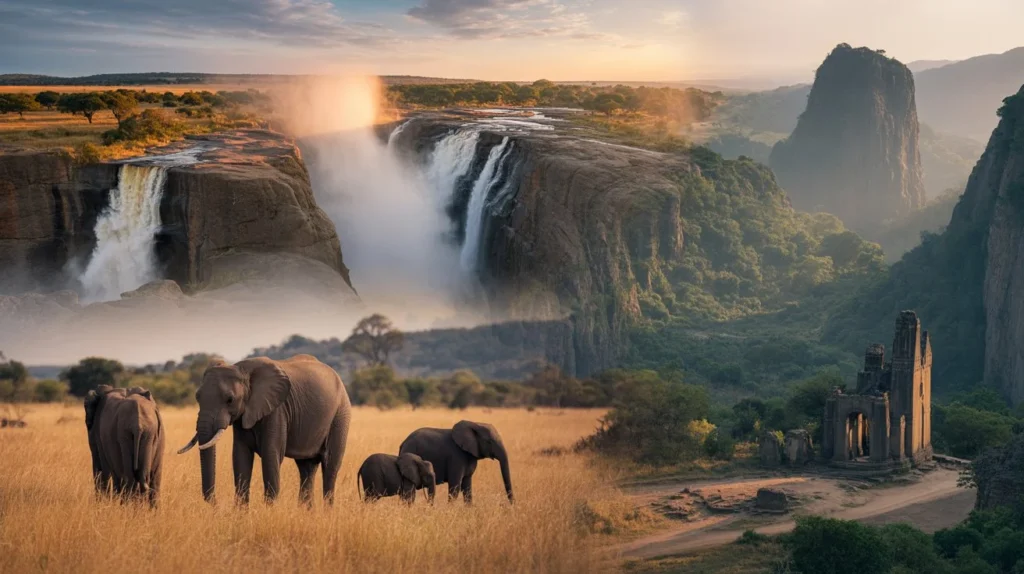
Most UK travelers use Harare as a gateway, but Zimbabwe’s real treasures lie beyond the capital dramatic waterfalls, ancient civilizations, world-class safaris, and landscapes that rival anywhere in Africa. Zimbabwe offers Victoria Falls (one of the Seven Natural Wonders), Great Zimbabwe ruins (UNESCO World Heritage Site), exceptional wildlife parks with fewer crowds than Kenya or Tanzania, and rich cultural experiences often overlooked by international visitors. The country is surprisingly accessible for independent travel. Infrastructure works, locals speak English, and distances between major attractions are manageable. You don’t need expensive tours or complex logistics just good planning. This guide covers Zimbabwe’s must-visit destinations, practical travel advice, multi-city itineraries, and insider tips specifically for UK travelers exploring beyond Harare. Victoria Falls: The Unmissable Highlight Victoria Falls is 1,708 meters wide and 108 meters high, creating the world’s largest sheet of falling water. Local name: Mosi-oa-Tunya (“The Smoke That Thunders”). The spray is visible from 30km away. Getting there from Harare: By air (recommended): Flight time: 1.5 hours Frequency: 2-4 daily flights (FastJet, Air Zimbabwe) Cost: £80-180 one-way Book domestically after arriving in Harare or as connecting flight By road: Distance: 850km Drive time: 9-10 hours Hire car with driver: £150-200 Overnight coach: £25-40 (uncomfortable, not recommended) By train: Overnight sleeper available but irregular schedules Charming but unreliable don’t rely on it for fixed itineraries Best time to visit: High water season (February-July): Peak flow: April-May Massive spray, thunderous roar Photography difficult (too much mist) Some viewpoints inaccessible due to spray Most impressive for first-time visitors Low water season (September-December): September-October: 50-60% flow November-December: 20-40% flow Clear views for photography Natural infinity pool at the edge of the falls accessible (September-December) White water rafting at its best Better for activities than viewing What to do: Zimbabwean side: Main viewing area: £25-30 entry 16 designated viewpoints Rainforest walk (bring waterproof!) Lunar rainbow viewing (full moon nights) Zambian side (requires visa): Different perspectives Natural infinity pool at the edge of the falls (swim at edge of falls, September-December) Less crowded than Zimbabwe side Activities: White water rafting: £80-120 (world-class rapids) Bungee jumping: £120-150 (111m drop) Microlight flights: £120-180 (aerial views) Sunset cruises: £40-60 (Zambezi River) Walking with lions: £100-150 (controversial, research ethics first) Where to stay: Budget (£40-80/night): Shoestrings Backpackers Victoria Falls Backpackers N1 Hotel Mid-range (£80-150/night): Kingdom Hotel A’Zambezi River Lodge Ilala Lodge (walking distance to falls) Luxury (£200-500+/night): Victoria Falls Hotel (iconic colonial property) The Elephant Camp Matetsi Victoria Falls Allow: Minimum 2-3 days for falls plus activities. 4-5 days ideal to include Zambian side and safari. Great Zimbabwe National Monument Medieval stone city ruins dating to 11th-15th centuries, once home to 18,000+ people. Largest ancient structure in sub-Saharan Africa after Egyptian pyramids. UNESCO World Heritage Site. The craftsmanship is extraordinary dry-stone walls (no mortar) standing 11 meters high, showing advanced engineering and architectural knowledge that challenges colonial-era narratives about African civilizations. Getting there from Harare: Location: Near Masvingo, 292km southeast of Harare By road: Drive time: 4 hours Hire car with driver: £80-120 for day trip Self-drive: Possible with rental car (good roads) Day trip or overnight: Day trip feasible (long day, 12+ hours total) Overnight recommended to explore properly without rushing What to see: Three main sections: Hill Complex: Original royal settlement Narrow passages between boulders Panoramic views Allow 1.5-2 hours, involves climbing Great Enclosure: Massive circular wall (11m high, 5m thick) Iconic conical tower Royal family residence Most photographed section Allow 1 hour Valley Ruins: Commoner settlements Multiple smaller enclosures Less crowded Allow 1 hour Practical details: Entry fee: £10-15 per person Guide: £15-25 (highly recommended brings history alive) Best time: Early morning (7-9 AM) before heat and crowds Bring: Water, sun protection, good walking shoes, camera Allow: 3-4 hours minimum for main sites Where to stay nearby: Masvingo town (20km away): Chevron Hotel (mid-range, £50-80) Lodge at the Ancient City (budget, £30-50) At the site: Great Zimbabwe Hotel (£60-100, convenient but basic) Combining with other destinations: Great Zimbabwe works well combined with: Harare (as day trip or 2-day itinerary) Gonarezhou National Park (3 hours south) Mutare and Eastern Highlands (3.5 hours east) Hwange National Park: Zimbabwe’s Premier Safari Zimbabwe’s largest national park (14,650 km²), home to 40,000+ elephants (one of Africa’s largest populations), plus lions, leopards, buffalo, rhinos, wild dogs, and 400+ bird species. Less crowded than Kruger or Masai Mara you’ll have wildlife encounters without safari traffic jams. Getting there: Location: Northwest Zimbabwe, 2 hours from Victoria Falls Access: Most visitors combine with Victoria Falls visit Fly to Victoria Falls, then 2-hour drive to park Self-drive possible but 4×4 recommended Most stay at lodges that arrange transfers Best time for wildlife: Dry season (May-October): Animals concentrate at waterholes Vegetation thinner (easier viewing) Peak wildlife: August-October Best for first-time safari visitors Wet season (November-April): Animals dispersed Lush green landscapes Baby animals born Bird watching exceptional Better prices, fewer tourists Safari options: Budget camping (£30-60/night): Main Camp (park-run campsite) Basic facilities, bring own food Self-drive game viewing Mid-range lodges (£150-300/person full board): Elephant’s Eye Miombo Safari Camp Include game drives, meals, guides Luxury lodges (£400-800+/person): Somalisa Camp Linkwasha Camp Little Makalolo All-inclusive with exceptional guides What to expect: Unlike East African parks, Hwange focuses on quality over quantity. You might see 10-15 species per drive rather than 30, but interactions are longer and more intimate. Highlights: Elephant herds (80-100 individuals) Wild dog packs (endangered species) Lion prides at waterholes Night drives (not allowed in Kenya/Tanzania parks) Allow: Minimum 2-3 nights. 4-5 nights ideal for serious wildlife enthusiasts. Eastern Highlands: Mountains and Tea Plantations Why it matters: Zimbabwe’s mountainous eastern border region offers cool climate, misty peaks, waterfalls, and scenic hiking completely different from typical African safari landscapes. Think Scottish Highlands meets African tea country. Main destinations: Nyanga: Highest point in Zimbabwe (2,592m) Waterfalls, hiking trails, trout fishing Cool climate (15-22°C year-round) Nearest town to Mutare (1 hour) Chimanimani Mountains: Dramatic peaks and valleys Multi-day hiking trails Remote and beautiful For serious hikers Vumba Mountains: Botanical gardens Coffee and